Featured Research
An 80-Run Benchmark of AI Login Agents
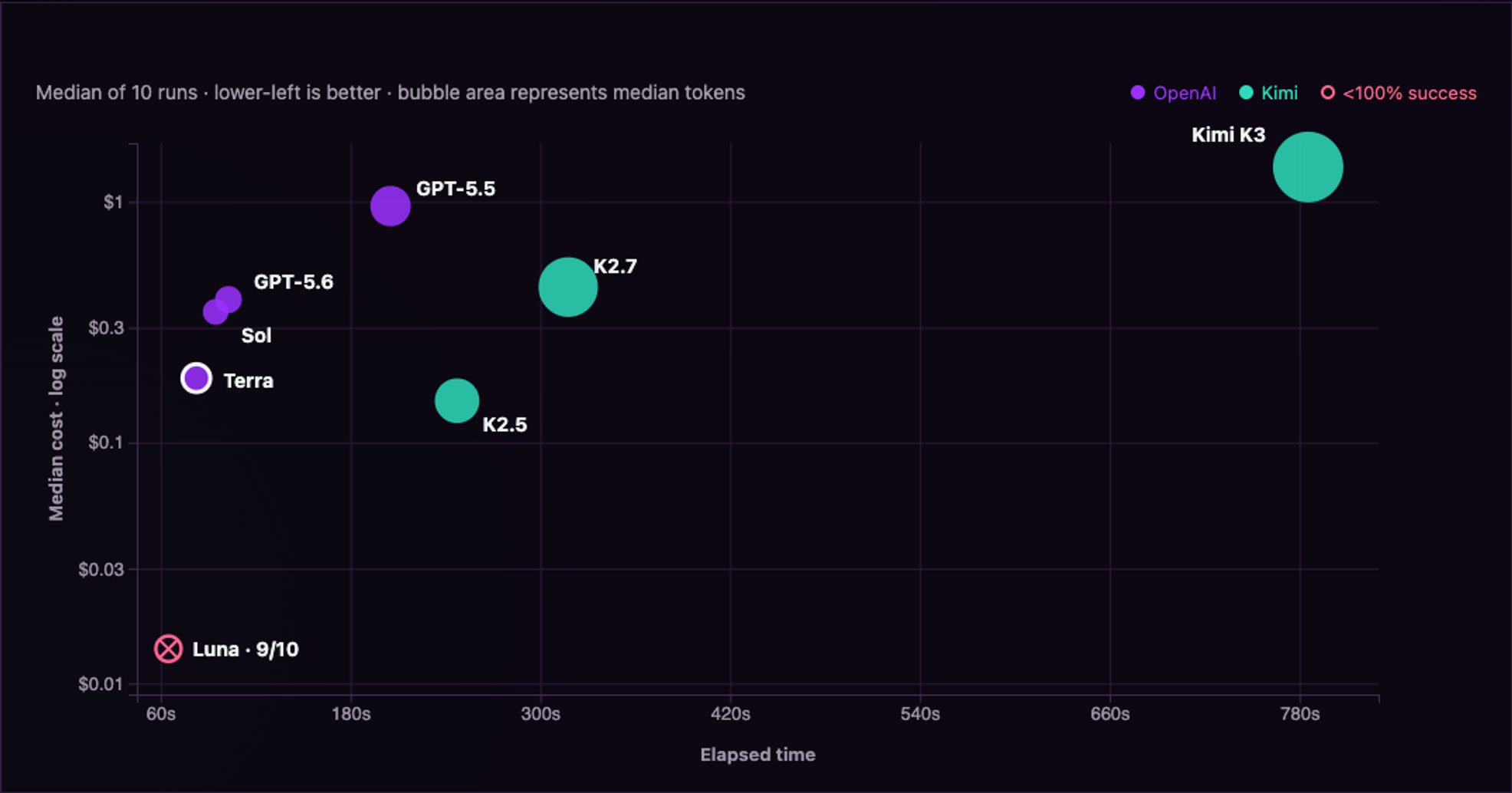
Eight models ran the same five-user login task 10 times. We measured authentication success, cost, latency, tokens, and execution strategy.
Eight models ran the same five-user login task 10 times. We measured authentication success, cost, latency, tokens, and execution strategy.
What two real authorization traces showed us about persistence, restraint, and the evidence gates Tahr needs around both.
Insight: Model choice changes how hard an agent pushes before evidence promotion.
Tahr treats access control as a coverage problem across identities, operations, object owners, and tenants, then promotes only proof-backed violations.
Insight: Access control testing should be modeled as coverage across users, tenants, objects, and operations.
Most AI security systems constrain every attack agent. We take a different approach: let some agents explore widely, then rely on a downstream verifier to keep only what is real.
Insight: Exploration and verification work better when different agents own each job.
A daemon-thread watchdog that escalates through five correction tiers (nudge, redirect, force-wrap, hard stop, terminate) to stop AI pentesting agents from drifting without cutting off legitimate work.
Insight: Long-horizon agents need live drift correction before budget is gone.
We pair every AI testing agent with a second agent that independently re-exploits each finding using statistical verification and drops anything it can't reproduce.
Insight: AI findings need independent re-exploitation before they reach a report.
Tahr runs LLM-powered security assessment agents across recon, authorization, exploit validation, source analysis, and reporting.